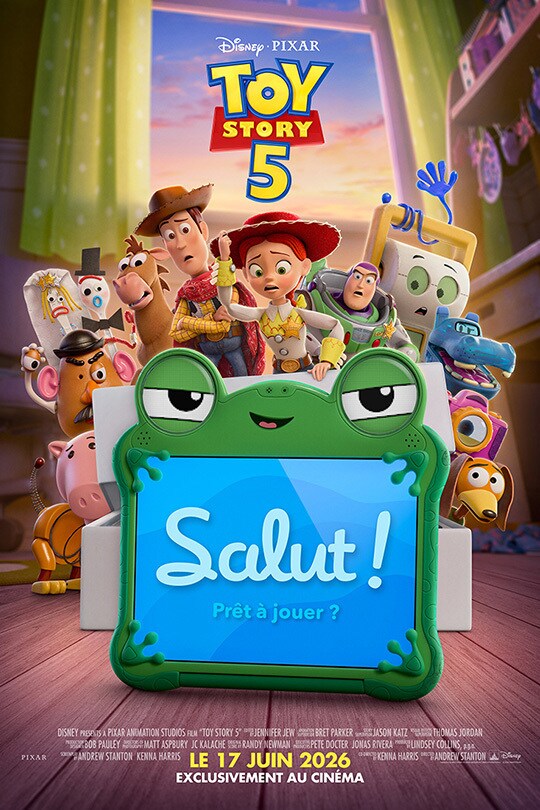
Trente ans après avoir révolutionné le cinéma d’animation, Toy Story revient avec un cinquième volet qui regarde l’enfance telle qu’elle est aujourd’hui. Une enfance qui n’a jamais connu les VHS, qui grandit avec les écrans tactiles et pour laquelle le numérique n’est pas une nouveauté mais un environnement naturel.
Pixar ne tombe ni dans la nostalgie ni dans le procès de la technologie. Le film choisit une voie plus subtile : celle de la cohabitation. Son personnage central, une tablette en forme de grenouille, est persuadé de pouvoir répondre parfaitement aux besoins des enfants. Ni véritable méchante ni simple faire-valoir, elle incarne une question que beaucoup de parents se posent : qu’est-ce qui nourrit réellement l’imaginaire d’un enfant ?
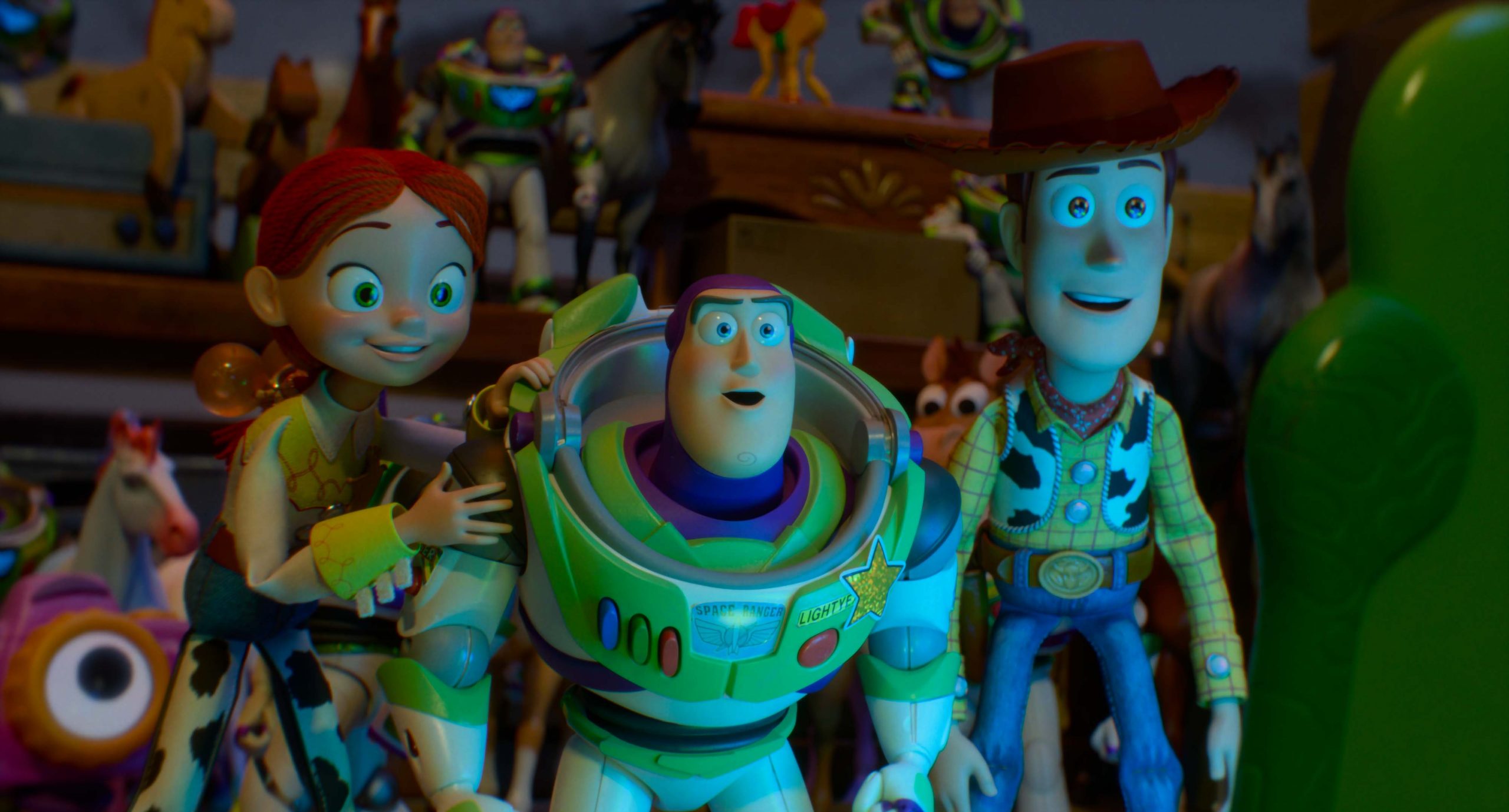
La réponse du film se trouve du côté des jouets, mais sans jamais opposer frontalement deux mondes. Car ce que défendent Woody, Buzz et surtout Jessie, ce n’est pas un objet en particulier. C’est une certaine idée du jeu : celle qui laisse place à l’invention, à l’ennui créatif, aux histoires que l’on construit soi-même. C’est d’ailleurs Jessie qui donne au récit sa profondeur émotionnelle. Son énergie, ses doutes et sa résistance au changement font d’elle le personnage le plus juste de ce nouvel opus. Dans une franchise aussi installée, parvenir à offrir une voix nouvelle à l’un de ses héros historiques relève presque de l’exploit.
Sous ses airs de grande aventure familiale, Toy Story 5 pose finalement une question essentielle : Quand tout est conçu pour capter l’attention des enfants, comment préserver les espaces où l’imagination peut encore vagabonder librement ? Une réflexion sensible, jamais moralisatrice, qui rappelle combien le jeu demeure l’un des langages les plus précieux de l’enfance
En salles le 17 Juin 2026.
Thirty years after it transformed the landscape of animated cinema, Toy Story returns with a fifth instalment that looks at childhood as it actually exists today. A childhood that never knew VHS tapes, that has grown up with touchscreens, and for which the digital world is not a novelty but a natural habitat.
Pixar falls into neither nostalgia nor a condemnation of technology. The film chooses a more nuanced path: that of coexistence. Its central new character, a frog-shaped tablet, is entirely convinced it can meet every need a child might have. Neither true villain nor simple foil, it embodies a question many parents quietly carry: what genuinely nourishes a child’s imagination?
The film’s answer lies with the toys, though it never sets two worlds in direct opposition. Because what Woody, Buzz, and above all Jessie are defending is not any particular object. It is a certain idea of play: one that makes room for invention, for creative boredom, for the stories a child builds entirely on their own. It is Jessie who gives the narrative its emotional depth. Her energy, her doubts, and her resistance to change make her the most compelling character in this new chapter. In a franchise as established as this one, finding a genuinely fresh voice for one of its long-standing heroes is no small achievement.
Beneath the surface of a grand family adventure, Toy Story 5 ultimately asks something essential: when everything around children is designed to capture their attention, how do we preserve the spaces where imagination can still wander freely? A sensitive reflection, never preachy, and a reminder of how profoundly play remains one of childhood’s most precious languages
In cinemas 17 June 2026.